 |
 |
 |
http://www.varalaaru.com A Monthly Web Magazine for South Asian History [189 Issues] [1849 Articles] |
|
|
|
http://www.varalaaru.com A Monthly Web Magazine for South Asian History [189 Issues] [1849 Articles] |
|
Issue No. 187

இதழ் 187 [ டிசம்பர் 2025 ] 
இந்த இதழில்.. In this Issue..
|


Abstract This article aims to provide an overview of the life, the vision, along with the contributions made by Mahakavi Subramania Bharati (1882–1921), an individual widely recognized as one of the most impactful figures in the fields of modern Tamil literature, journalism, nationalism, and social reform. The article comprehensively explores Bharati's early life, the development of his patriotic and literary sensibilities, the nature of his revolutionary thinking, his contributions to India's fight for independence, and his lasting impact, all through a smoothly flowing narrative. The poetic brilliance of Bharati, along with his radical social viewpoints and his steadfast devotion to nationalism, is a significant factor in how the cultural and political realms of contemporary India have been moulded. Introduction The story of Subramania Bharati is the story of a flame—brilliant, intense, brief, and unforgettable. Bharati, who was born in Ettayapuram on December 11, 1882, would later evolve from the tranquil setting of a small Tamil village to emerge as a prominent figure, becoming one of India's most revered poets and a strong voice advocating for freedom. More than just an author, he was a visionary individual who was far ahead of his era, and he courageously advocated for women, those who were oppressed, for the unification of the nation, and for spiritual equality, at a time when such notions were seen as rebellious. Even though his life was marked by an untimely end, Bharati's legacy continues to stand as a monumental chapter in the story of Indian literature and the struggle for freedom. His writings—poetic, political, philosophical—continue to shape the Tamil imagination and inspire millions. This narrative revisits his journey, capturing the forces that shaped him and the legacy he left behind. 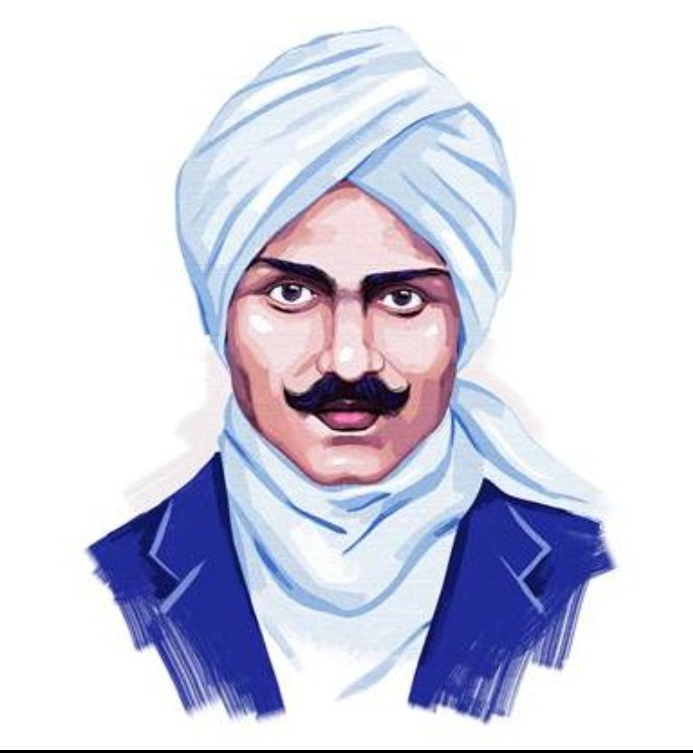 Concise Life history of Bharati Bharati’s early years were marked by intellectual brilliance. The young Subbayya, as he was first known, displayed extraordinary linguistic talent, at just eleven, he astonished scholars with spontaneous verse and earned the title “Bharati,” blessed by Saraswati. Subramania Iyer, his father, had envisioned his son pursuing a career in engineering, although it was evident that the boy was destined to follow a more poetic path. The loss of his parents during his youth not only made him resilient but also cultivated a greater sense of empathy for the struggles of others. The M.D.T. Hindu College served as the starting point for his early education and helped him discover new interests, and his time in Benares dramatically changed his academic and spiritual perspectives. Having moved there, Bharati became involved in North Indian culture, studying Sanskrit, Hindi, and English, and adopted a pan-Indian consciousness which soon began to surface within his poetry. Through his marriage to the young Chellammal, a lifelong partnership commenced, one that would persist through periods of hardship and exile. With the arrival of the twentieth century, Bharati entered the field of journalism, commencing his work with Swadesamitran during 1904. The print world provided him with new perspectives, which in turn refined his voice and deepened his political understanding. Bharati's reformist vision was ignited by his encounter with Sister Nivedita in 1905, which became a turning point, and her ideals of women’s emancipation, national awakening, and fearless service greatly influenced him. He revered her as his spiritual guide, embracing her conviction in the force of Shakti, while also imagining a contemporary Indian woman who would possess equal standing with men, contributing to the construction of a new society. His political activity became more involved following his attendance at the Congress sessions held in Benares and Calcutta. His voice became more assertive, drawing inspiration from influential figures such as Dadabhai Naoroji, Tilak, and Aurobindo. In 1907, he was responsible for editing the newspapers India and Bala Bharatham, both of which were filled with incisive political critiques and showcased exciting new developments in the literary world. Through Bharati's talent for merging lyrical qualities with his activism, his writings became known for their poetic nature and their ability to provoke strong reactions. Because he supported V.O. Chidambaram Pillai during the British crackdown and chose to align himself with the militant wing of the nationalist movement, the colonial authorities became suspicious of his actions. After an arrest warrant was issued in 1908, he was compelled to escape to Pondicherry, a period of exile that would prove to be intellectually stimulating. Pondicherry became Bharati’s golden era. During his time living under French protection, he worked alongside Aurobindo, took on the responsibility of editing several journals, and was the author of some of his most celebrated masterpieces, such as Kuyil Pattu, Panchali Sabatham, and Kannan Pattu. It was through these writings that his extraordinary lyrical skill, the depth of his philosophical thinking, and the breadth of his imagination were made apparent. The scope of his poetry extended to encompass such subjects as the divine, the concept of nationhood, the expression of love, the beauty of nature, the pursuit of social harmony, the advocacy for women’s rights, and worldwide revolutions. The scholarly rigour of his work is apparent when one considers his translations of the Vedas, Patanjali’s Yoga Sutra, and the Bhagavad Gita. Yet these years were also marked by poverty and isolation, as the British government blocked letters, remittances, and publications. In 1918, when Bharati tried to re-enter British India, he was arrested and imprisoned. Annie Besant and C.P. Ramaswamy Aiyar's intervention led to his freedom, however, the deterioration of his health had already commenced. Regardless of any challenges, he remained committed to writing, speaking, and continuing to inspire people. The meeting he had with Mahatma Gandhi in 1919, while not lengthy, was impactful, with two significant figures in nationalism acknowledging each other's significance. Bharati's time in Triplicane during his final years was marked by the simultaneous presence of his creative achievements and a decline in his physical condition. The unfortunate incident at the Parthasarathy Temple, involving his deep affection for the elephant Lavanya, had a negative impact on his health, causing it to deteriorate. He passed away on 11 September 1921 at the age of 38, unnoticed by most, with only fourteen people attending his funeral. However, Bharati's passing did not signify a conclusion, but rather a commencement of something new. The concepts he put forth regarding women's liberation, caste equality, universal religion, and national unity were groundbreaking and significantly surpassed the prevailing ideologies of his era. With the same level of enthusiasm, he sang devotional hymns dedicated to Shiva, Krishna, Jesus, and Allah, proclaiming that truth was not the property of a single faith. Performing a Harijan’s upanayanam and condemning narrow orthodoxy, he took steps to shatter the existing caste barriers. Throughout Tamil Nadu, his nationalistic songs were embraced as the anthems of liberation, accompanying freedom movements. Tamil poetry was revolutionized by his literary style, which employed simple words that held a profound force, a rhythm that was both classical and modern, and imagery that was filled with life and passion. His poems and works, including Murasu, Puthiya Aathichudi, and Pappa Pattu, along with many other patriotic lyrics, earned him the title of the people's poet. The remarkable depth and breadth of his mind were evident in his mastery of 32 languages, as well as in his translations and philosophical writings. Conclusion Even though Subramania Bharati lived a short life, the fire he started continues to burn brightly and will always be present in the hearts of those in Tamil Nadu and India. Throughout his life, he was a poet, a rebel, a philosopher, a journalist, and ultimately a prophet of social change. With exceptional significance even now, his enduring vision for a free India, a society founded on principles of justice, and the advancement of empowered womanhood still resonates deeply. Although his life ended in poverty and neglect, history has subsequently elevated him to a position of eminence that is unparalleled by many others. Bharati transformed Tamil literature, redefined nationalism, and gave voice to the voiceless. His poetry's legacy lives on, inspiring marches in protest, finding its voice in classrooms, and being performed in concert halls. His actions went further than writing verses and instead, he brought an entire civilization to wakefulness. Mahakavi Bharati is immortal, and his legacy continues to live on due to this awakening. |
வீடியோ தொகுப்பு
Video Channel 
நிகழ்வுகள் Events 
சிறப்பிதழ்கள் Special Issues 
புகைப்படத் தொகுப்பு Photo Gallery 
|
| (C) 2004, varalaaru.com. All articles are copyrighted to respective authors. Unauthorized reproduction of any article, image or audio/video contents published here, without the prior approval of the authors or varalaaru.com are strictly prohibited. | ||
